The process approach and Plan-Do-Check-Act (PDCA) model were introduced into ISO 9001 with the 2000 edition. That version is largely considered the best edition of ISO 9001 we’ve ever had, with the subsequent 2015 and 2026 versions being far inferior. This is because of the takeover by private consultants at TC 176, the committee that authors ISO 9001.
But the 2000 version was not perfect. It could have been, if they’d made minor tweaks, but the consultants made things worse with the 2015 version. None of those errors were fixed in ISO 9001:2026, and instead the newer generation of consultants, led by Sam Somerville, Devindra Chattergoon, and Jose Dominguez, broke it further.
One of the problems has been the incomprehensible graphic related to the PDCA model, wherein ISO 9001 has tried to assign the clauses of that standard to each PDCA step. They bungled it terribly, and this has resulted in nearly two decades of confusion and misinformation; that, then, has led to quality management systems that are, at their core, broken.
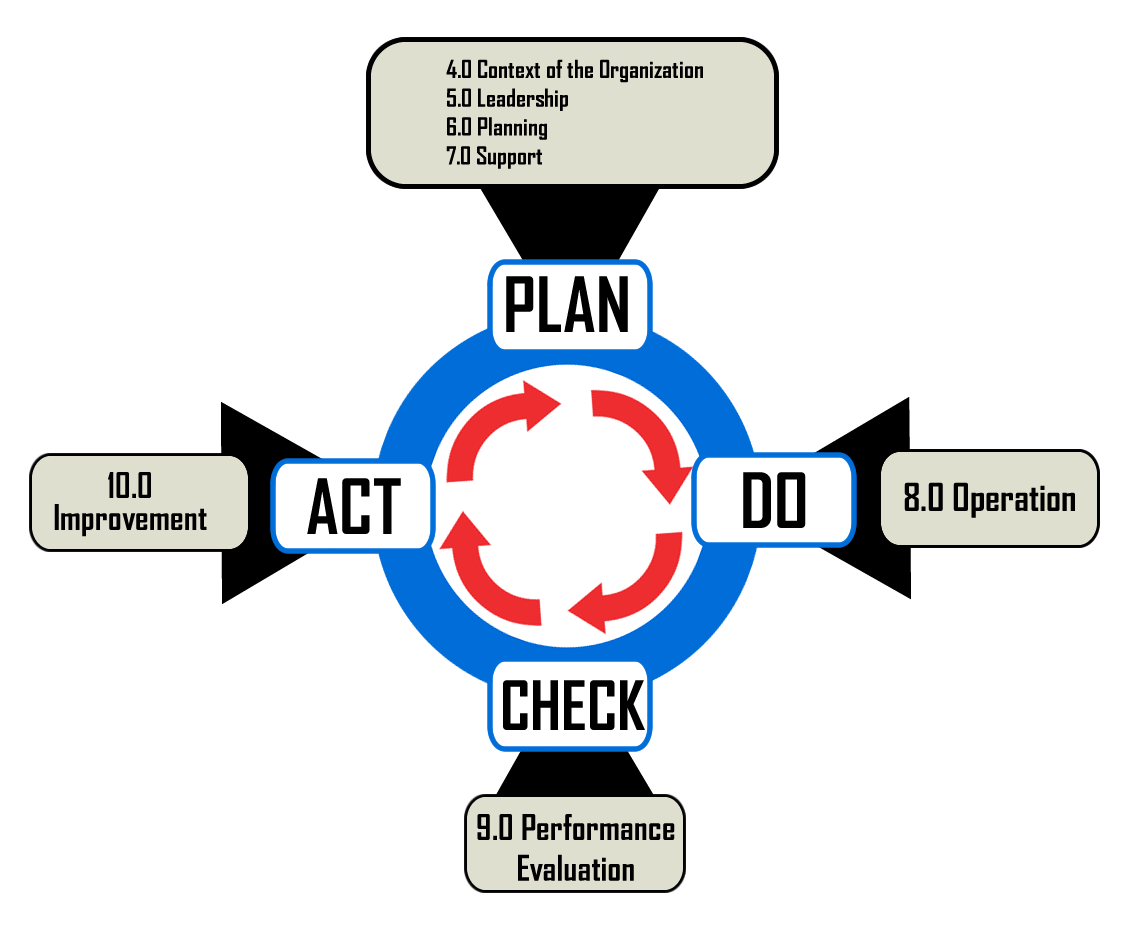
The current graphic appears like this:
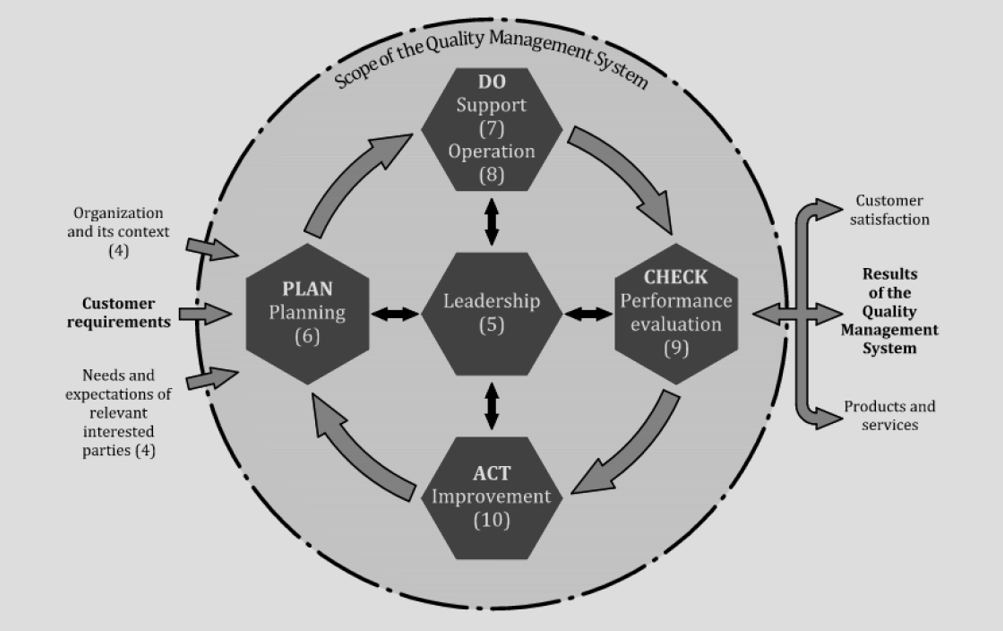
However, there are two problems here. First, Somerville and her gang of Nu-Quality consultants have assigned the wrong clauses to the wrong steps in PDCA. They can be forgiven, somewhat, since they inherited this error from the prior editions of ISO 9001. But if they had proper education, experience, and credentials, the Somerville Gang might have fixed this, and they did not.
Next, if they had actually read the standard they are now credited with having written, the Somerville Gang might have noticed that clause 10.0 of the ISO 9001:2026 standard never loops back to Clause 4.0, as the graphic suggests.
So, not only is the graphic wrong, the actual text of the standard doesn’t align with the graphic either! As a result, PDCA is broken within ISO 9001, and Somerville and her pals never bothered to fix it.
(To see more on this, check my video here.)
Instead, here is how the graphic should appear, to both reflect the accuracy of how ISO 9001 clauses align with the PDCA model, and then how the standard could have been revised to ensure it remained consistent:
 Here, Leadership moves to the Plan stage of PDCA and then, as a result, receives feedback from 10.0 (Improvement), the Act stage. As it should.
For an amateur — which I consider the incomprehensibly unqualified Somerville — sure, it makes sense to assign Leadership (5.0) to all the steps at once. But that’s a layman’s view, one driven by a complete lack of experience in management systems and a lack of actual management insight. In truth, Leadership must start and stop at Planning, where they make the decisions most crucial to the system. Yes, they will continue to manage the other steps (Do, Check, and Act), but only after information is provided to them through the loop, coming from the final step, Act.
If management tinkers with each step and process before Act, then they are not basing their decisions on information derived from Check and Act. They are, as Deming would object to, simply making ad hoc, knee-jerk decisions in the absence of actual data. That’s toxic to a functioning QMS, as it allows the CEO to interject into the system’s functioning any time they have a hangover or lose a golf game.
But that’s how Somerville saw things. Like her Nu-Quality colleagues, she doesn’t know what she doesn’t know because she lacks both experience and credibility.
I strongly urge companies not to copy-and-paste the graphic from ISO 9001 into their Quality Manuals or other QMS documents. It’s not only wrong, but it also has no real bearing on the practical execution of your management system. Worse, many people wrongly assume this PDCA map somehow reflects the process approach, and they use it in that context. It has nothing to do with processes; it only maps ISO 9001 clauses to the PDCA model itself. Your actual processes are something entirely different.
A cringeworthy aside: I have seen quality management systems adopt “Plan, do, Check, and Act” as their processes. This is usually the end product of a clumsy, unqualified consultant trying to rubber-stamp a single approach on each client. It’s dumb, and a clear sign that you don’t know what you are doing. “PDCA” is not a process model; it is a set of actions that, taken in sequence, help drive improvement. Your processes should reflect the actual things you do: sales, purchasing, design, manufacturing, repair, etc.
If you must use a graphic to define PDCA against ISO 9001, please use the one above. ISO 9001 content does not automatically earn authenticity or credibility just because it is published by a Swiss standards developer that ignores international laws and engages in illegal activities like price gouging. You have the right — and responsibility — to critically question ISO content and then adjust it to your own end use.

Christopher Paris is the founder and VP Operations of Oxebridge. He has over 35 years’ experience implementing ISO 9001 and AS9100 systems, and helps establish certification and accreditation bodies with the ISO 17000 series. He is a vocal advocate for the development and use of standards from the point of view of actual users. He is the writer and artist of THE AUDITOR comic strip, and is currently writing the DR. CUBA pulp novel series. Visit www.drcuba.world